
The Montessori Approach to Monitoring Progress

Restaurant%2BBlog%2BGraphic%2B%252817%2529.jpg

Merriam-Webster defines assessment as:

“The Action or an instance of making a judgment about something: the act of assessing something.”

How do guides track progress?

Notes. Notebooks full of thoughtful and detailed handwritten notes. At least that’s the traditional way of recording progress. Many schools are now shifting over to digital platforms that are created specifically for Montessori schools. Still, many Montessori teachers continue to keep their own detailed records by hand.

Montessori teachers are masters of observation. They think like scientists and spend lots of time sitting back and quietly watching the children at work. When they’re not giving lessons, they’re observing. They write all these observations down and then review them later to help decide what lessons to revisit, what new materials to present, or even what parts of the classroom environment need attention or change.

Summative assessment vs. Formative assessment?

Traditional schooling relies a lot on summative assessment. Summative assessment relies on testing, which is usually done at the end of one unit, or a cumulative standardized test at the end of the year. This model is data-driven and typically in a format for adults to measure different points rather than giving students constructive feedback. Montessori relies much more on formative assessment, which allows the teacher to be more flexible and observe the child’s individual learning needs. With this approach, a teacher can assess what the student can accomplish by observing and determining the right time to move on to a new lesson or spend more time on another.

How is Mastery Evaluated?

In other schools, mastery is evaluated by a test score or a letter grade. Generally, in Montessori schools, mastery of a particular lesson or concept is evaluated during the lesson. This is done through a tool developed by Dr. Maria Montessori called the ‘three-period lesson.’

  • First Period: The guide will introduce a skill to the child. For example, “these are the parts of a flower.” They will use images, puzzles, or other representative materials in order to show the child.

  • Second Period: The guide will present the child with some information and let the child show the rest. For example, “What part of the flower is used for pollination?” then they will allow the child to show them.

  • Third Period: The guide will determine if the child can independently express the information they have gathered during previous lessons. For example, “Now it is your turn to label the parts of the flower and explain what each part does. What is this part?”

Once the child is able to complete the Third Period successfully, the guide can assess that they have mastered that lesson. There is no need to give them a letter grade or a formal test; the child has shown you that they understand the lesson and the concept. Through the Montessori approach, assessment is done one-on-one, between the child and the guide. Each child is able to learn and progress at their own pace, continually being challenged and feeling engaged in their learning. The best part? Because of the beauty of the materials and the tone of the classroom, the child perceives this as a sort of game rather than a test to be dreaded.
Sensitive Periods: A Brief Overview

Dr. Maria Montessori discovered that young children transition through a series of special times where they gravitate to specific developmental interests and needs. She called these times sensitive periods and during these periods children have an acute ability to learn certain skills with ease. They seek out certain work, they crave it and do not tire of it. When this brief sensitive period is over, that sensation of fascination passes, and the intense desire to learn that skill is gone. Once that sensitive period has passed, the child will have a more difficult time learning the skill. 


Birth to age 1

IMG_9770.JPG

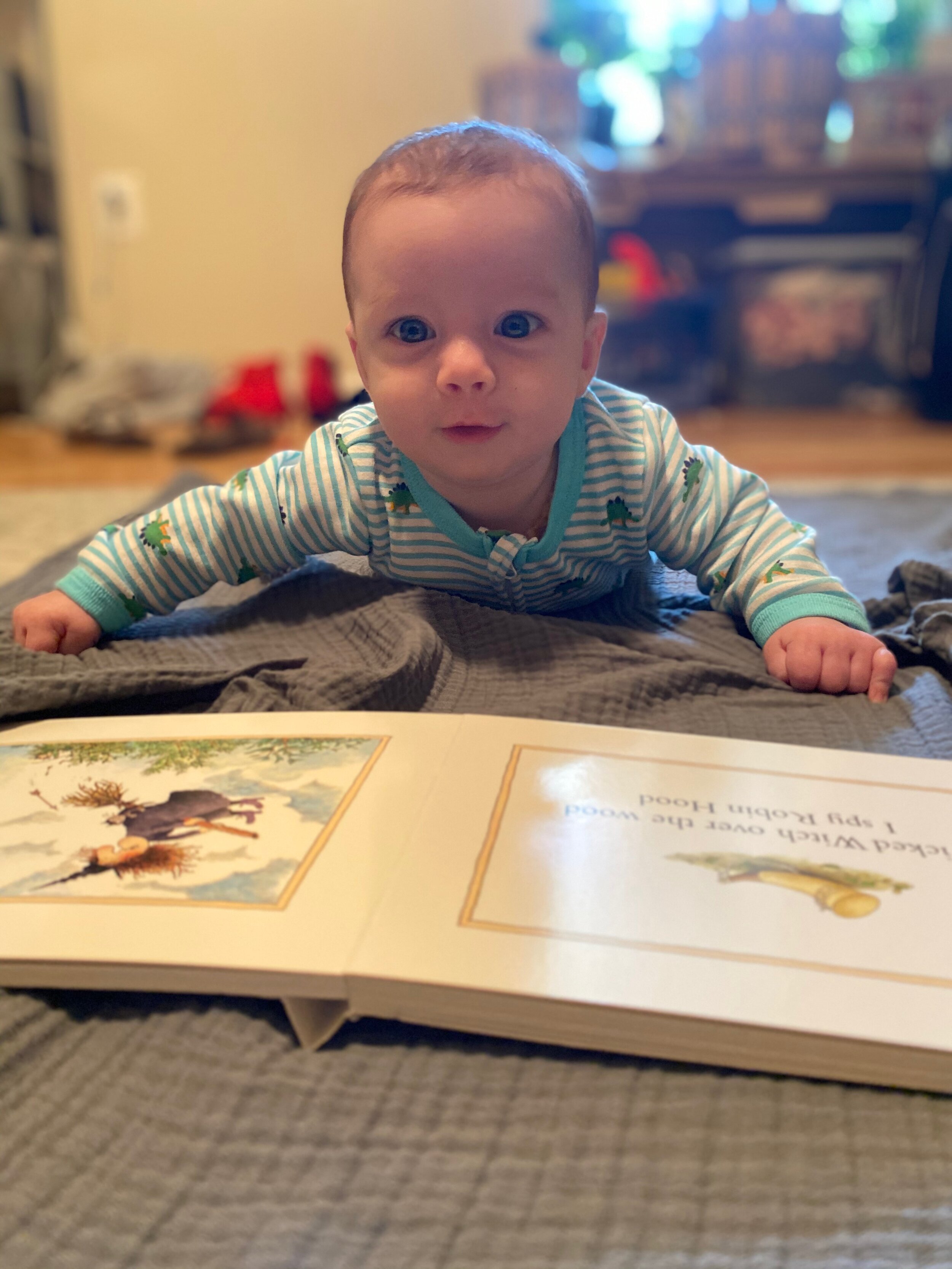
Sensory learning: Babies interact with their environment in an effort to refine their many senses. This learning continues throughout early childhood, and Montessori classrooms are equipped with specialized materials that appeal to the child who is seeking such practice. 

Verbal language: In the early months of a child’s life, they are listening to the language of others around them, attempting to make sense of sounds, patterns, and inflections. They derive meaning from the speech of those older than themselves even before they are able to speak. 


Ages 1 to 4 

Continued sensory learning and verbal language. 

Development of speech: The child will begin to expand their vocabulary.

IMG_9617.jpg

Motor coordination (both fine and gross): From body control and movement (running, jumping, skipping…) to manipulation of small tools (think holding a pencil, cutting with scissors, sewing, etc.), these three years involve a lot of work on the child’s part! 


Ages 3½ to 4½ 

IMG_9712.jpg

Continued sensory learning and verbal language.

Writing: Children at this age are ready to begin the work that will help them become writers. They will learn to hold a pencil properly, to draw lines carefully and intentionally, and to form shapes that lead to cursive and print letters


Ages 4 to 5 

Continued sensory learning and verbal language and continued motor coordination (typically until shortly before age 6).

e8365290ac14af79d60f9f0ed556b1c929ddc1d7.original.jpg

Reading: At the beginning of this sensitive period, the child is understanding sounds and blends. They then move on to reading simple words, more complex ones, and eventually stringing them into sentences 

Mathematics: During this time the child is preparing to learn basic math skills, and eventually mastering them. They develop a sense of numeration, place value, and operations, among other important skills. 


Ages 6 to 12

bbc322234532cdccf20ba63b2c599cf71fcaa223.original.jpeg

Social development: During the primary years children often engage in what is referred to as parallel play, when they sit beside one another but focus on their own agenda. In the elementary years, there is a definite shift; children crave the company of their peers. They want to sit together, talk together, work together, and learn from each other. They learn the many benefits of friendship while also developing skills to resolve conflict and work together as a group. They learn the delicate balance between the needs of the group and their individual needs. 

Understanding and interest in justice and morals: When children at this age have recess time, adults commonly report that most of the time is spent by the children developing the rules for the game, with far less time being used to play the game itself. They are very interested in making sure things are fair, and they are at the perfect age to learn about character development and how we should treat one another.

IMG_5483 (1).jpg

Imagination: Children at this age use imagination not just as a fantasy world, but as a vehicle in which to place facts. Storytelling used to teach information is particularly useful at this time. 

Interest and understanding in human history and culture: Now capable of thinking of more than themselves, elementary-aged children are keen to learn about the origins of humans and the various ways we live around the world and have lived throughout history.

Interest and understanding of the history and evolution of the universe: Much like their interest in humans, children at this age are curious about the universe and everything that resides in it. They are fascinated by creation stories, both those told from a modern scientific perspective and those that reflect historical cultures around the world. They are also the perfect age to learn about the evolution of life on earth.


Outlines like this one can often be helpful in determining what your child might be ready for, and what kind of things are appropriate to be in their environment. It is important to remember that ultimately it is a guide to following the child. Children will naturally be drawn to whatever their minds are ready to absorb. It is our work to notice what these things are and provide our children with the means necessary to fulfill their needs.

Our best advice (as it so often is) is to observe! Observe what is filling your child’s cup and encourage them to explore those things that are sparking their interest. Don’t wait, catch them while that spark is still gleaming!

The Importance of the 6th Grade Year

Restaurant Blog Graphic (15).png

Some middle school programs start in 6th grade and many students are curious about this transitional year. Here’s why it’s important to stay in Elementary for that final year.

Culmination of the Childhood Years

The 6th grade year is not only the last year of the elementary cycle; it’s the final year of the second plane of development. Children this age are almost on the brink of adolescence, a period of rapid growth and change. While a 12-year-old child may appear to have entered their adolescent stage, studies have shown this is not always the case. The gap between the child’s physical maturity and their cognitive maturity can contribute to emotional difficulties in the future if they are too quickly moved to an environment in which they are not yet ready. Staying for the final elementary year allows the student to benefit from the stable classroom environment, building upon their social and emotional skills to enter the next phase of their development confidently. By staying in the elementary classroom for their 6th grade year, children have a chance to develop a deeper sense of self-confidence and maturity that will serve them as they enter their adolescent years.

Establishing and Maintaining Relationships

1c8067c3e1021e1cf4dc5c274c363675e3489ce3.original.jpeg

Traditional public schooling rotates the student body annually, with a new teacher and peers each year. Some middle schools have a different teacher and classroom for each subject. This can make it challenging for the child to form meaningful relationships as they are repeatedly trying to assimilate into a new environment. A Montessori classroom gives each child consistency and the opportunity to maintain long-lasting and secure friendships. The child will feel more comfortable seeking out challenging work and grow into leaders of the classroom, making them model citizens beyond their years of education.

Advanced Curriculum

befab6479fd803341dad6181f433e29fe672d4e6.original.jpeg

Montessori schools take pride in creating a robust Elementary curriculum that includes challenging opportunities that keep students motivated and engaged. Oftentimes you will find that sixth graders in a Montessori classroom are proficient in work that is far above the 6th grade level in a traditional public school. This is because Montessori does not lead the child into fitting a standardized “mold.” Instead, it takes a more specialized approach, allowing the child to explore at their pace and develop a deep sense of confidence and accomplishment. We champion thoughtful leadership and make sure that no child ever feels bored with the work they have available to them.

An Opportunity for Leadership

Because of the child’s mastery of the Montessori work in the elementary classroom, the 6th grade year is the time when they will take advantage of many leadership opportunities. This is paramount to the Montessori academic and social philosophies. When children teach children, it’s not just about knowledge being shared, but also about cultivating world citizens. Teaching each other is an act of kindness and a way for children to practice helping others around them. Through developing confidence in their work and ability, your child will be able to teach work to the other students and ultimately become a leader within their classroom. This provides them with an excellent foundation for a successful secondary education.

752887dc222584fbfe43b04165a0ea20fb445b15.original.jpg