Our Daily Bread: The Link Between Our Communal Meal and The Atrium

By Jennifer Ashton, Primary Guide
IMG_4410.jpg

In the Children’s House, there is a beautiful integration between the liturgical life of the Atrium and our communal mealtime, a shared experience we have each day. We have often spoken about our community table where we gather to eat. Children arrive and set the table with tablecloth, napkins and glasses. Others prepare the food that will be shared. Others still, gather around in anticipation to check in, when will it all be ready?!

IMG_4380.jpg

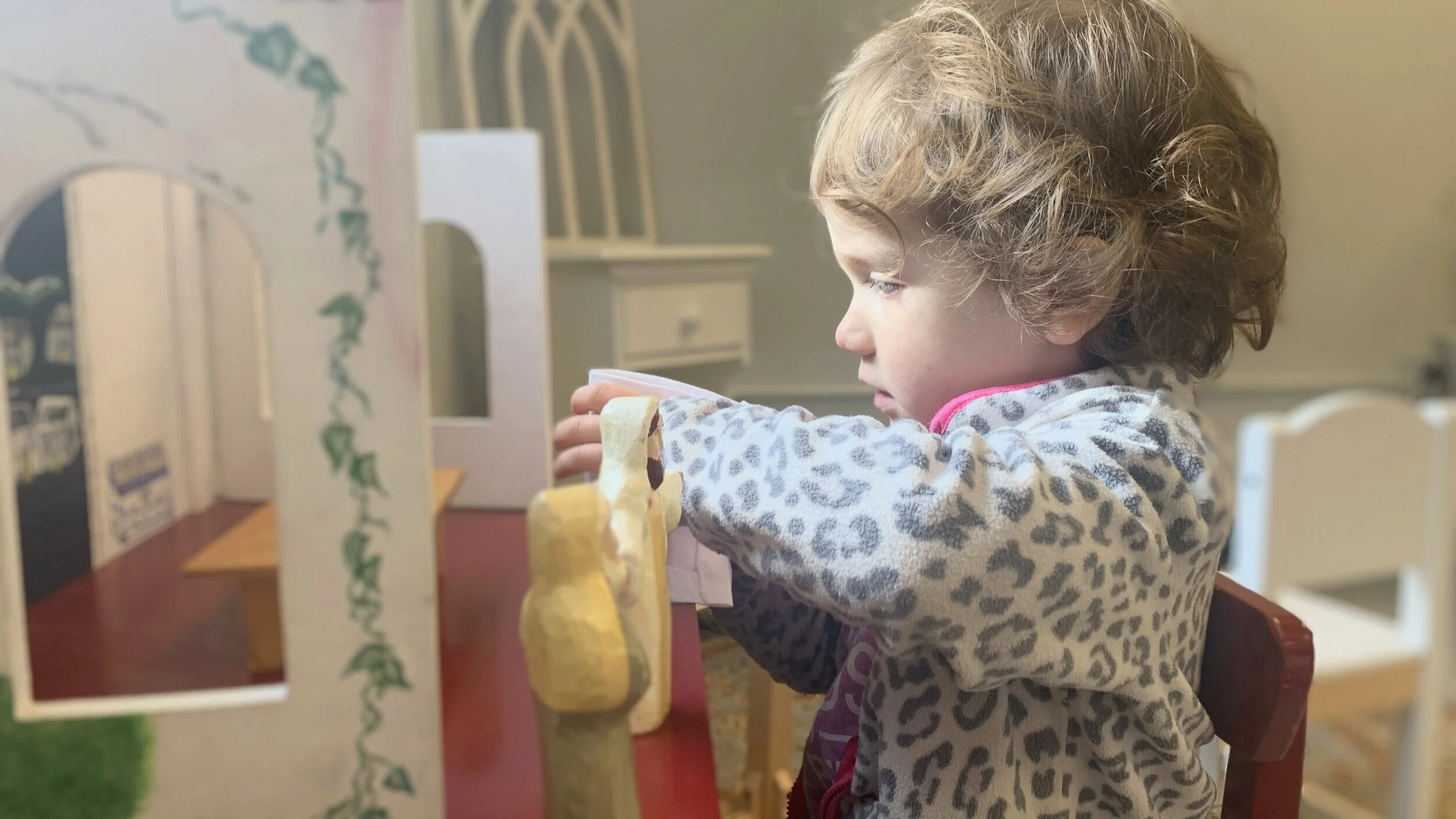
Our community meal is a reflection and a modeling of the way Our Lord gathered His closest friends together to share and break bread with one another many times, leading to that most important meal, where He revealed Himself in the Eucharist. It is during Ordinary Time in the Fall where we share the presentation of the Model Altar with the children. At the Holy Mass it is Jesus who calls us to the table to share in this special meal.

The Altar also has a special and beautiful tablecloth, that is white like the light! A small model Paten, Chalice, Crucifix, and candles are also set on the table, and we identify each one as it is reverently placed on the Altar. Once it is prepared, we light the candles and say the words, “Christ has died and Christ is Risen.” When the children prepare the Model Altar in the Atrium, it is their prayer of thanksgiving and they love to sit and enjoy it’s beauty. It is beautiful to see the meticulous care with which the children prepare the meal and the table that they will sit at to share in their communal meal, and to see a parallel in the careful preparation that is done to set up the Model Altar. It is a lucid demonstration of the familial bond that we take part in as members of the Body of Christ, and teaches the children in a clear and simple way how we are all a true family with Christ and one another. These are some of the first steps that the child will take in understanding the depth of the reality of the Mass, and in a few years, the child will be able to participate even more fully when he receives his first Holy Communion!

When you go to Mass with your children, try to sit as close as you can to the Altar so they can see what is happening. The more they are able to witness, the more fully they will grasp the importance and beauty of this shared meal that Christ Himself beckons us to! You can also take a tour around the Church before or after Mass and enjoy stained glass artwork, or the statues of Mary, Joseph and the saints. Look at the articles on the credence table. Jesus said, Let the little children come to Me, and do not hinder them! For the kingdom of heaven belongs to such as these.” Matthew 19:14

Wait and Watch, Transformations are Happening All Around!

By Mary Pat Blanchette, Middle School Guide

Pink Mother's Day Blog Banner (1).png

“Let us leave the life free to develop within the limits of the good, and let us observe this inner life developing. This is the whole of our mission.” (Dr. Montessori’s Own Handbook)

The word transformation is playing over and over in my head this week. One simple definition states: "a thorough or dramatic change in form or appearance." Transformations are taking place in the Middle School community, in me, in the children and in our outdoor works.

Mrs. Wolf planted sweet potatoes this summer with some of the children in our community. We harvested them on Monday. Transformation! Because of the lack of rain this summer, we weren’t confident of what we would dig up. The dramatic change took place under the surface and the joy of the discovery of bountiful sweet potatoes was also a transformation in our souls.

The children picked a large amount of green beans last week. The excitement coming from them was tangible. They washed the beans, snipped the ends, and then made the environment smell like a four star restaurant. Here we are again, transformation. Garlic, beans, salt, pepper, paprika, sugar and olive oil! So delicious, and from our raised beds.

Sometimes in life the transformation is slow, hard to see, or maybe even invisible. So then, I become anxious, irritable, my peace and focus slip away. God in His great mercy sends someone or something, . . . sweet potatoes, a child, a coworker to restore my peace. Have patience and take heart! The transformation is taking place in His time, not my time.

Developing Through the Senses, Despite the Possible Messes

By Claire Nguyen, Toddler Guide

11cbbb9b68ad0b4d094cc3e2a6be57dceda5b922.original.jpg

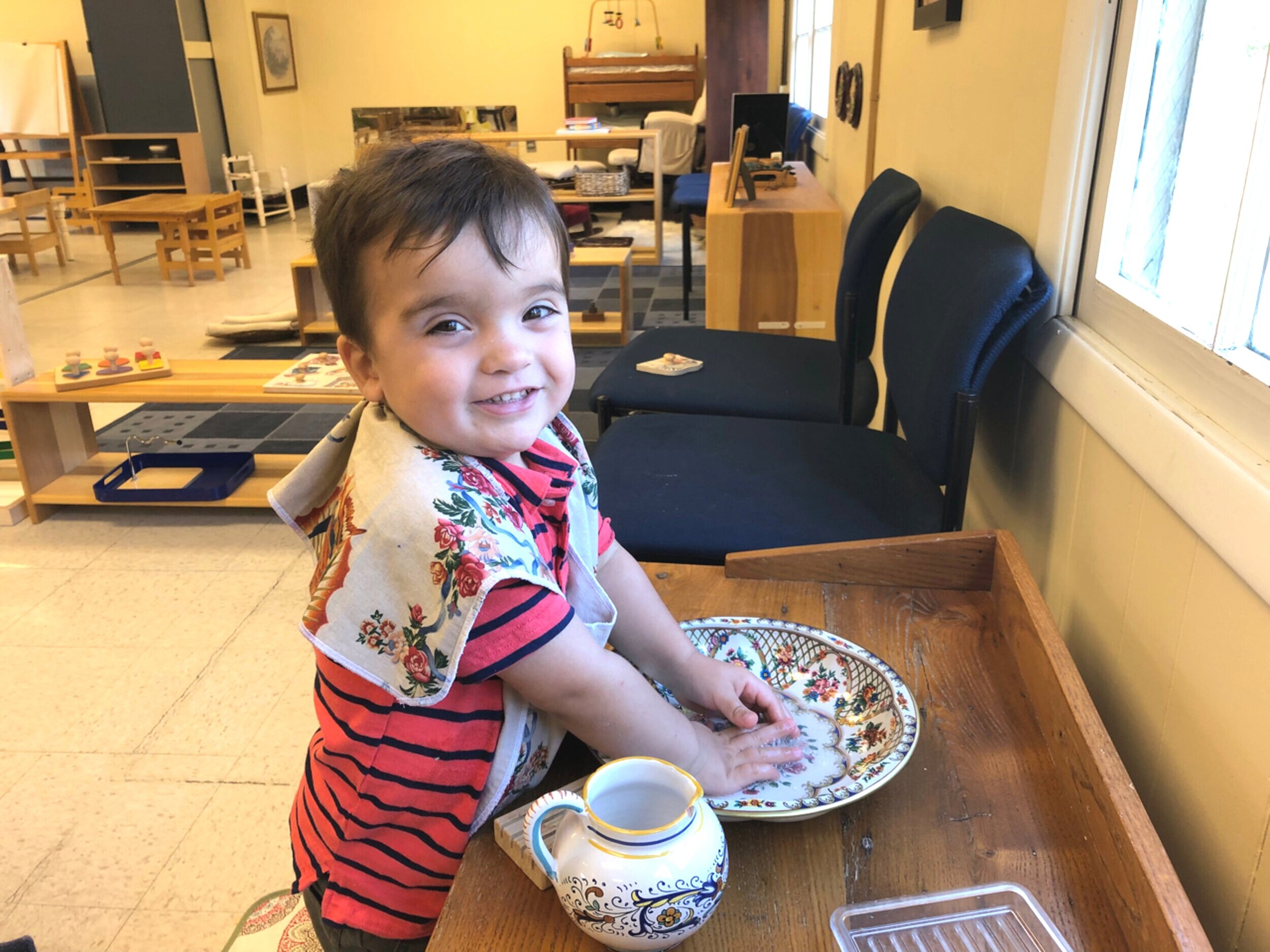
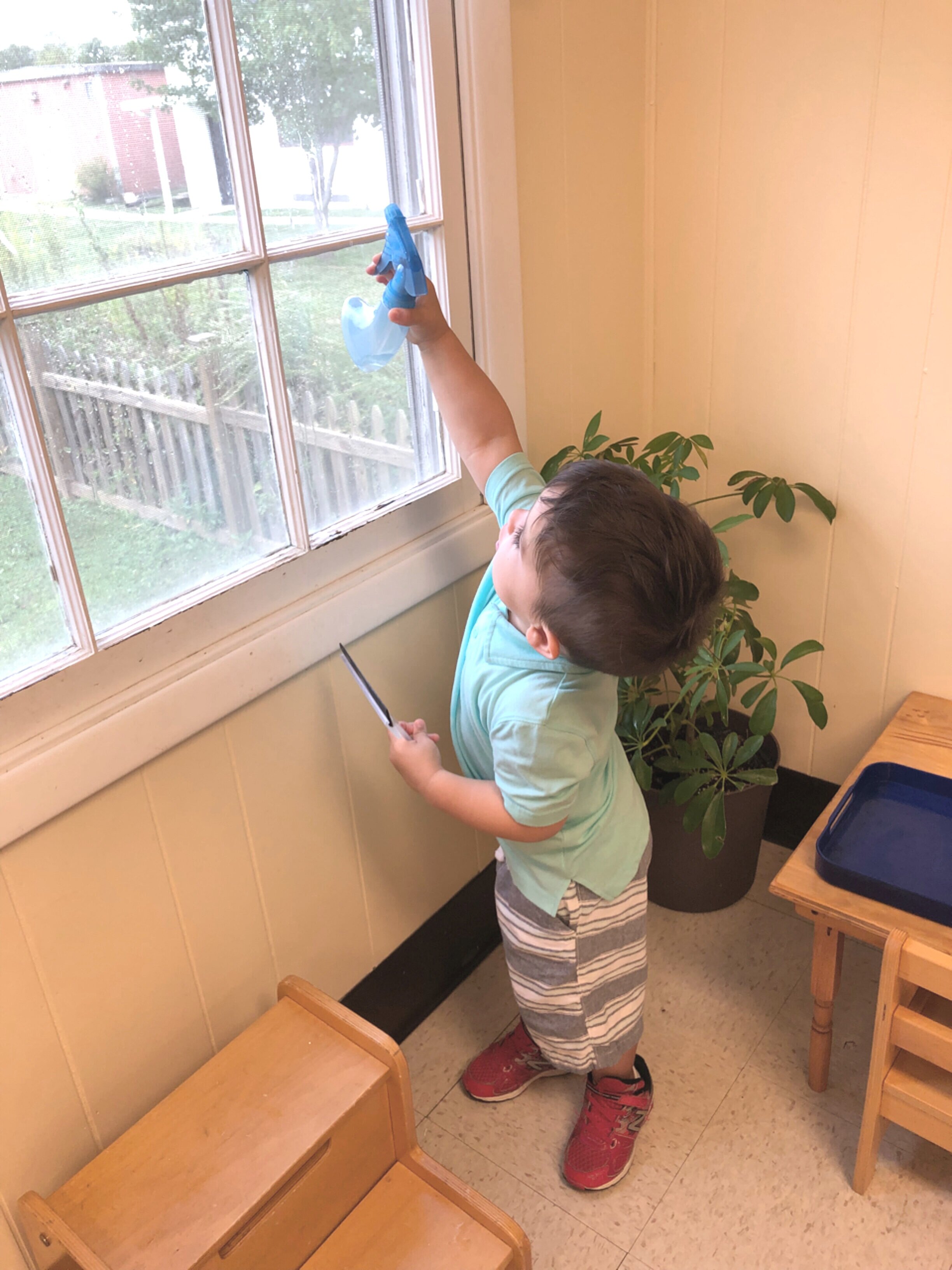
The Young Children’s Community is busy mastering their movements, the BIG movements! They practice daily climbing up and down the stairs and riding the trike, repeatedly. In addition, the toddlers are focusing more on the intricate and controlled movements they do in mixing the ingredients for bread, kneading the dough, and particularly in dish washing, table scrubbing, hand washing, and window washing. 

The latter four works I mentioned share an important matter needed to do the activities, they all require WATER!! Water is used daily for many things. In our toddler classroom, we use water in our practical life works to care for the environment and to care for ourselves. Children are naturally attracted to water which is why these works are so interesting to them. They love these works so much that most children need to change in to dry clothes (sometimes twice) before the morning concludes.
 
To give you a glimpse of what the children do when they choose a practical life work, here are the steps:
 

  1. Fill the pitcher with water (sometimes several times);

  2. Hold the pitcher with two hands and walk carefully with the water-filled pitcher to the basin/bowl;

  3. Pour the water into the basin/bowl; and

  4. Do the work (hand washing, dishwashing, table scrubbing, etc.) – the child is engaged for long periods of time and is deeply concentrated.

After step 4, most children walk away from the work without cleaning up, which is normal for toddlers that are 1 or 2 years of age. Some toddlers do the clean up process and/or restore the work back on the shelf. As the year progresses, most of the children, if not all, will be able to accomplish the work from beginning to end. 
 
As I’ve mentioned before in one of our weekly updates, the importance of repetition with no time restrictions is necessary in supporting toddlers to master their skills and achieve independence. I highly encourage parents to allow your children to work as freely as possible with water. Water is invaluable for their development so “sit back” and witness the full sense of joy and love of your children’s activity!