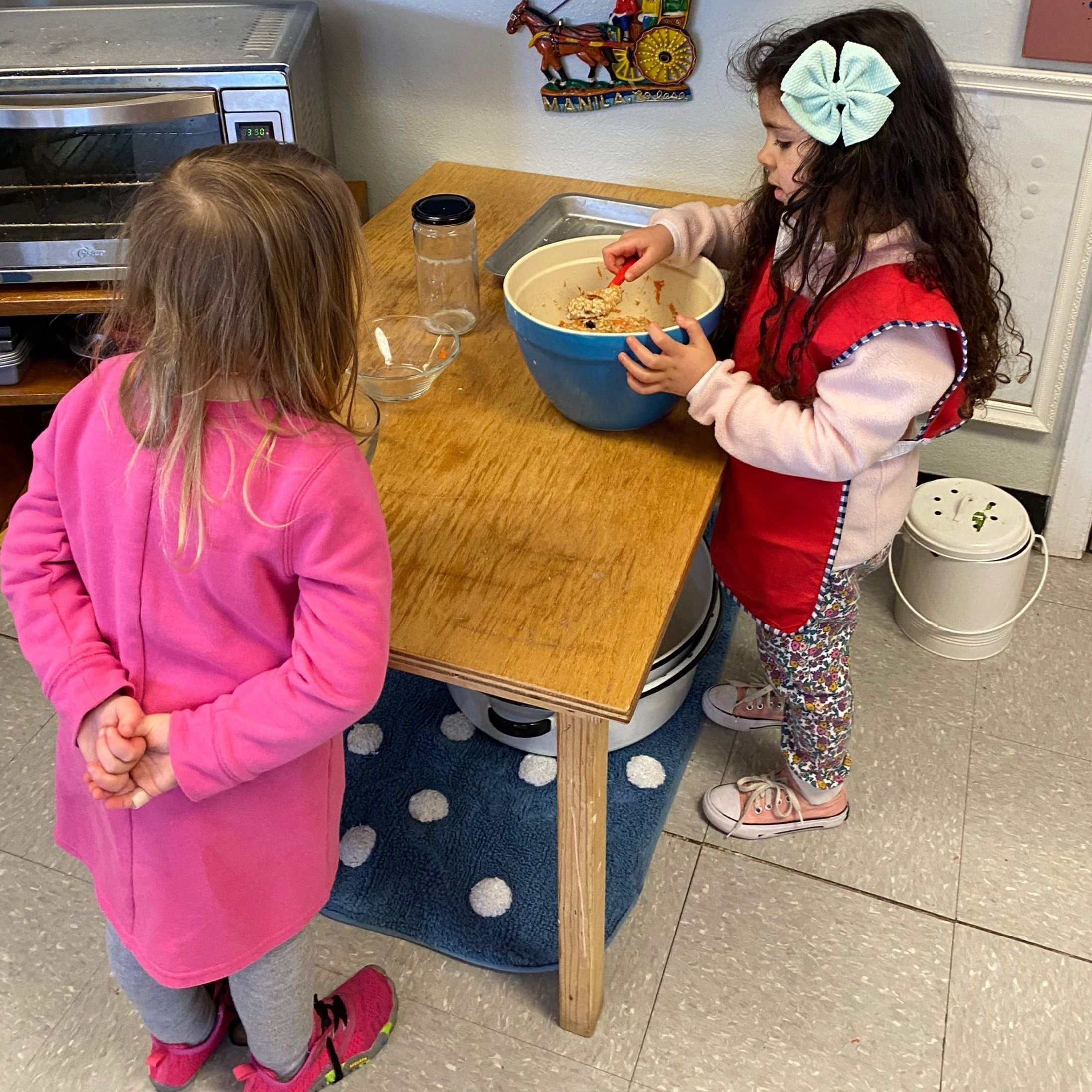
Montessori classrooms rely heavily on the art of observation. You may see it in action some time, or you may have an opportunity to try it yourself (which we welcome and encourage!). If you ever walk past a classroom and see the children working intently, while the guide is quietly sitting in a corner with a clipboard, know that guide is working intently as well.
Why we do it
Dr. Maria Montessori was a scientist and a physician. Her education and background helped her look at the world in a way that is different from most traditional educators. Observation of children was what inspired her work in education, and she used it to develop her methods. Not only that, but Montessori guides all over the world rely on observation to learn about their students, gain insight about developmental phases, inform our decision-making, and to assess the children’s mastery of skills. So what are the main goals of observation in the classroom?
Planning appropriate lessons - Montessori educators are trained to have extensive knowledge about child development. While most traditional teacher education programs require students to take a course on the topic, development is essentially the foundation of everything we do as Montessori guides. Practiced guides know so much about the behaviors of growing children that seemingly insignificant occurrences signal a transition into a new plane of development. The toddler that has mastered toileting and can be observed spending long amounts of time with practical life activities is making the transition necessary for the primary classroom. A child nearing six that has lost a tooth and seems suddenly very motivated by social interactions with their peers is moving into the second plane of development and will respond well to lessons involving storytelling and deeper information about cultures around the world. The challenge of the guide is to identify the moment when a child is entering a sensitive period; this is their development showing they are ready to learn specific skills that must be taught in a way that honors their growth.
Making sure the environment serves the children - While the guide’s role in a child’s education is important, the environment plays an even bigger role. It is the guide’s job to make sure the classroom environment allows children to find what they need, feel inspired to work, fosters independence, and allows for safety and comfort. If, during an observation, it is noted that a piece of furniture disrupts the flow of movement, it will be moved at a later time. If many children prefer to work on the floor, it will be important to note whether there are enough work rugs for them all to use. If no children have used a specific material in a number of weeks, it may need to be reintroduced or removed from the shelf. Each item in the classroom must be placed intentionally and with a specific purpose in mind. If it is no longer serving its intended purpose, reflection and a solution are required.
Assessment of skills - The word assess is derived from the Latin form to sit beside. Montessori schools do not determine mastery with the use of tests, but rather by utilizing observation. Instead of giving children a piece of paper with questions on it, we watch them in action. When a child is able to independently place number tiles in random order on a hundred board, we know they have grasped the concept of ordering those numbers. A child who is able to complete complex patterns within the shape they traced using a metal inset, and who also frequently uses the sandpaper letters correctly is likely ready to learn the written formation of letters using a pencil on a piece of paper. This assessment, of course, ties back into planning appropriate lessons, as the guide has concrete information to inform their instruction.
What it looks like
Formal observations - A Montessori guide will likely observe in the classroom most days, or multiple guides may take turns observing. These observations typically last between fifteen and thirty minutes, but the amount of time can vary. While each guide has their own preferred method, they typically sit quietly and use a notebook to record what they observe. Children are taught about the importance of this work and they know not to disturb the adult at this time. Sometimes a guide will sit in a specific chair or use a special clipboard to signal to the children that they are working. For new guides, the temptation to intervene can be powerful, but we learn that unless a child is in danger it’s often best to wait it out and see what happens. Most classrooms have a second adult that is able to redirect a child who may be overly disruptive, allowing the observing adult to continue. During this time the guide simply watches and takes lots of notes. It is important that the notes be strictly observational and that any judgement or inferencing be reserved for another time.
Informal observations - During the course of the work period, guides will make a great many observations in the moment. While walking across the room to retrieve something, while speaking to a child, or even whilst in the middle of a lesson, there are many helpful bits of information a guide can gather and record that will help make the children’s educational experience the best it can be. As you may imagine, this results in many, many notebooks full of amazing and adorable anecdotes.
Visitor observation
Whether you are considering Montessori for your child, they are in a program but getting ready to move to a new level, or if you’re just curious and want to learn more about the philosophy, observation is one of the greatest tools available to you. Even the most experienced guides make time to visit other Montessori schools when possible so that they may observe other classrooms and gather fresh ideas and inspiration. We invite you to contact us should you be interested in giving it a try.
When you enter a Montessori classroom to observe, it is very important to know that the children will be engaged in their work and the goal is to watch without disturbing them. In many other scenarios in life, we announce ourselves upon entering a room, perhaps even greeting others enthusiastically. When observing in the classroom, we ask that visitors refrain from doing these things, tempting as it may be! You will likely be greeted by an adult or child and directed to a chair. Having a notebook or clipboard is helpful, as you are sure to experience moments you will want to record. If a child approaches you and greets you, by all means please feel free to briefly greet them in return. In general, however, you will need to sit quietly and observe in a way that the children forget you are there, leaving them free to focus on their work. Montessori children are quite used to visitors, so this shouldn’t be a problem.
Some questions that will help guide your observation include:
In what ways are the children displaying independence?
How do the children choose their work?
What do transitions between work look like?
How do the adults respond to the children?
How do the children respond to the adults?
How do the children interact with one another?
How do the children care for their own basic needs?
Does anything about the classroom environment surprise you?
When your observation is complete, it is best to slip out of the classroom quietly. In this situation you are not expected to say any formal goodbyes.
You can do this at home!
While home is very different from the classroom, there are ways that parents can apply the basic concepts of Montessori observation. While trying to engage with our children, it can be easy to fall into patterns in which we begin directing their play. Every once in a while, sit back and watch as your child plays. You may notice them using their toys in surprising ways, and this may give you insight to their interests and maturity. Similarly, it can be tempting to jump in and help any time your child spills something, falls down, or struggles to do something. Instead of rushing to the rescue, wait. If they ask for help, of course, lend a hand, but oftentimes they will want to address the situation themselves. Watching to see what our children are capable of and nurturing their independence is one of the greatest gifts you can give them.
As you pay attention and observe your child’s play, eating habits, sleeping habits, and social habits, you may learn many new things about their development. This, in turn, will allow you to reflect on how you might best support them on their journey through childhood. Slow down, observe, and enjoy those moments.